Wondering about the SAA-C03 exam difficulty before you register? It is challenging but very passable. This blog talks about the difficulty level of the AWS Solutions Architect Associate Exam and elaborates on the different ways to tackle the exam on your first attempt confidently. Read through to know more!
Understanding the SAA-C03 Exam Difficulty Level
The AWS Solutions Architect Associate exam has grown in relevance as more companies move to the cloud. Understanding the exam’s difficulty is crucial for effective preparation. AWS does not publish an official SAA-C03 pass rate, but the exam is widely considered challenging yet very passable, thanks to its complex, scenario-based questions that reward hands-on AWS experience and good time management. Recognising this early helps candidates build structured study plans, use practice exams, and avoid underestimating the challenge.
How Difficult Is the Exam?
The difficulty of the AWS Solutions Architect Associate certification depends on many factors, like your background and preparation. While it is an associate-level exam that doesn’t require prior experience, AWS recommends at least one year of hands-on experience designing cloud solutions. However, many professionals with 1-3 years of IT experience have successfully earned this certification as their entry point into the AWS ecosystem.
Is SAA-C03 Hard?
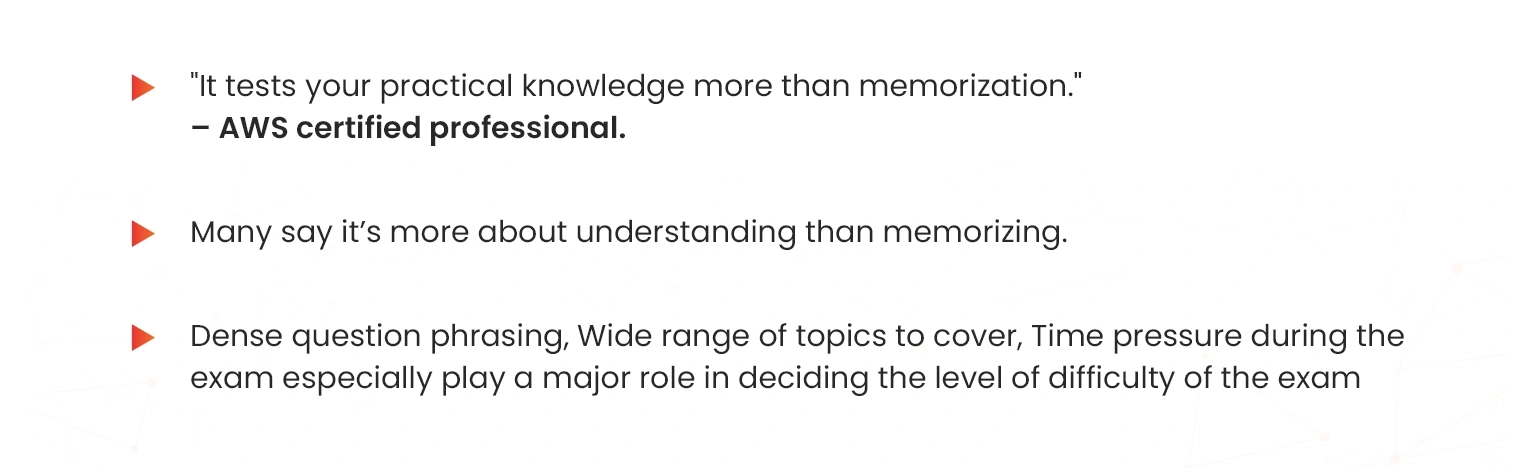
It depends on your experience with AWS. The associate level is not particularly difficult. So how hard is SAA-C03 in practice? The challenging part is the wording of some of the questions, but as long as you take your time to understand what each question is intended for, it is not a very difficult exam. Its challenge level depends on your familiarity with AWS services, cloud computing, and exam preparation strategy.
The difficulty of any certification depends on your study methods, preparation time, and familiarity with the subject. Even with no prior AWS experience, the right approach can help you pass with confidence. A combination of resources, practice exams, hands-on learning, and well-structured study materials can make a big difference.
Learners’ Perspective
We have come across many reviews from our learners, which include,
- As long as you know the basics of every main product (S3, ELB, SQS, CloudFormation, AutoScaling, EC2, IAM, and so on), you should be good to go.
- The goal of the associate-level exam is to be able to get the product catalog in your head, not to master it.
- Take S3, for example: it’s an object-based storage. It isn’t any more complicated than that. Learn how to use it. Learn its retention rules, life cycle management, encryption options, differences with Glacier and Reduced Redundancy options, Static website options, and finally, Versioning.
- If you dedicate 2 sessions of 2 hours each to S3, you’ll know more than you’ll ever need about S3. Rinse and repeat for all other products.
Factors That Affect the AWS Solutions Architect Associate Exam Difficulty
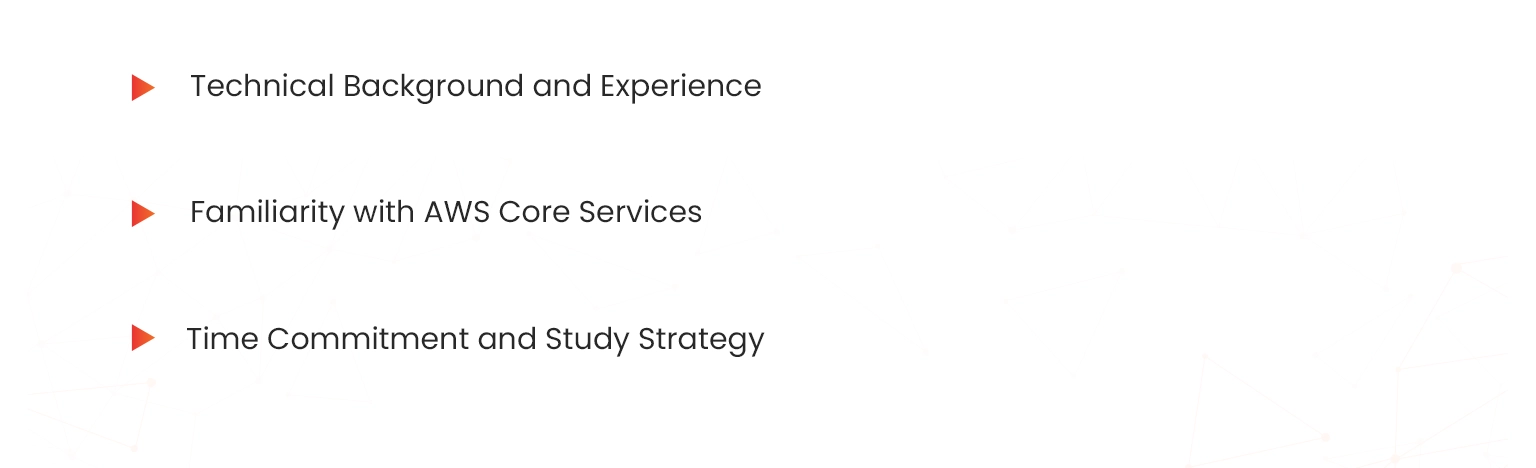
Technical Background and Experience
A strong technical background significantly influences the AWS Certified Solutions Architect Associate exam’s difficulty. Well, if you do not have adequate tech experience, you might require additional time to understand cloud architecture and AWS-specific terminology. Practicing hands-on can bridge this gap.
Familiarity with AWS Core Services
AWS core services, such as S3, RDS, Lambda, and CloudFormation, are your major picks. The exam tests practical application through scenario-based questions, and misunderstanding services’ use cases, like choosing DynamoDB over RDS for NoSQL needs, increases difficulty. We suggest you study service limits and review the Well-Architected Framework to build confidence and reduce errors during the exam.
Time Commitment and Study Strategy
The exam’s difficulty revolves around time commitment and study strategy. Inconsistent study or reliance on memorization without hands-on practice heightens challenges. A structured plan, including 100-150 hours of study over 2-3 months, with regular practice exams and labs, is essential. Effective time management during the 130-minute AWS Solutions Architect Associate, allocating roughly two minutes per question, also mitigates difficulty.
Suggested Study Hours for the AWS Certified Solutions Architect Associate Certification
AWS recommends 80-120 hours of study for candidates with some cloud experience. Beginners may need 150+ hours. Weekly goals, like 10-15 hours, ensure steady progress.
Balancing Work and Study for the AWS Solutions Architect Associate Exam
Balancing work and study requires discipline. Schedule daily hours, using weekends for labs and mock exams. Prioritize high-impact topics like IAM and S3 early. Consistent, focused effort prevents burnout and ensures exam readiness. For more tips, check out – how to pass cloud certifications while working full time.
Practice Exams and Labs: Why They Matter
Practice exams simulate real test conditions; they give you familiarity with time management and the style of questions. Hands-on labs and sandboxes build real skills with AWS services like EC2 and S3, which is critical for the scenario-based questions. Concentrate on S3 and its types, security, and the other core AWS services. And finally, VPC is very, very important; try to get a thorough knowledge of it and of subnetting too.
We suggest you use credible study resources to get your preparation done. After completing a course, practising exam questions is a must, because working through realistic questions is what prepares you for the real thing. The Whizlabs AWS SAA-C03 course pairs practice tests, training videos, and hands-on labs so you can do exactly that. When you are consistently scoring well above the pass mark on the practice tests, you are in good shape for the real exam.
Common Challenges Faced by SAA-C03 Candidates and Success Stories
One of the major challenges is misunderstanding core AWS services, like confusing EC2 with Lambda or S3 storage classes. It is a frequent pitfall for an AWS Solutions Architect Associate test taker. This can happen from just learning theoretical resources without practical application. Hands-on labs and real-world scenarios clarify service use cases, such as RDS for databases compared to DynamoDB for NoSQL.
This 130-minute, 65-question AWS Solutions Architect Associate Exam requires strong time management. You might often dwell on complex questions, risking incomplete sections. Timed mock exams, prioritizing questions, and allocating two minutes per question will help. Sometimes, overconfidence in AWS services and architecture or under-preparedness for time constraints can derail candidates. Practice tests and hands-on AWS console experience balance readiness and confidence.
Test takers have reported that scenario-based questions and time pressure are significant hurdles. Many who fail initially cite inadequate hands-on practice or over-reliance on memorization.
Your AWS Success is in hands-on AWS experience, particularly with services like EC2, S3, and VPC. Structured study plans and practice exams enhance preparation. Time management skills and your familiarity with the Well-Architected Framework are critical for navigating the exam’s complexity.
Is Taking the AWS Solutions Architect Associate Worth the Effort?
While passing the exam matters, the process itself is what drives career growth. Many professionals report meaningful salary increases after certifying, according to industry surveys.
The challenge-versus-reward balance is clear: a demanding exam weeds out unprepared candidates, which keeps the credential valuable. Clear study plans with hands-on practice and mock exams support ongoing learning, which is essential to maintain expertise and position you for long-term growth in the cloud industry.
Conclusion
This blog covered the key takeaways for success on the AWS Solutions Architect Associate path: its difficulty level, real exam experiences, and ways to ace it. The exam tests practical skills and broad knowledge, and your success depends on diligent preparation and hands-on practice. Many find it rewarding, with a real boost to their careers. Prepare well, stay focused, and you can pass. Feel free to contact us with any queries.
Frequently Asked Questions About SAA-C03 Exam Difficulty
Is SAA-C03 hard for beginners? Is SAA-C03 hard if you are new to AWS? It can feel that way at first, but plenty of people pass it as their very first AWS certification. With hands-on practice and a structured plan, beginners close the gap quickly.
What is the SAA-C03 pass rate? AWS does not release an official SAA-C03 pass rate. The exam is scored from 100 to 1000, and you need 720 to pass. Most candidates who prepare with hands-on labs and practice tests clear it on their first attempt.
How hard is SAA-C03 compared to other AWS exams? How hard is SAA-C03 next to an exam like the Cloud Practitioner? It is a clear step up, because it tests design judgement through scenarios rather than plain recall. It is still more approachable than the professional-level AWS exams.
What affects SAA-C03 exam difficulty the most? The biggest driver of SAA-C03 exam difficulty is hands-on experience. Candidates who have actually built on AWS find the scenario questions far more intuitive than those who only studied the theory.
Does the AWS Solutions Architect Associate exam difficulty change over time? The AWS Solutions Architect Associate exam difficulty stays broadly consistent, though AWS refreshes the question pool and covered services from time to time. Preparing with current materials keeps you aligned with the latest version.
Keep Reading
- Before you start preparing, it helps to know exactly what is on the test: see the full SAA-C03 syllabus.
- When you are ready to build a study plan, follow our guide on how to prepare for the SAA-C03 exam
- And for a real account of what the exam feels like, read how one learner passed SAA-C03.
- For official information about the exam, refer to the Amazon AWS SAA-C03 exam page.

- Tableau Data Analyst Salary and Job Trends 2025 - September 30, 2025
- Ultimate Java SE 21 1Z0-830 Preparation Guide for Beginners - September 30, 2025
- Best AWS Certification Courses in 2025 - August 22, 2025
- How to Pass the NVIDIA NCP-ADS Exam in 2025 - July 15, 2025
- Top 10 Topics to Master for the AI-900 Exam - July 10, 2025
- SC-401 Prep Guide: Become a Security Admin - June 28, 2025
- How Does AWS ML Associate Help Cloud Engineers Grow? - June 27, 2025
- SAA-C03 Syllabus: Top 15 Topics for the AWS Exam - June 24, 2025