


Cloud architecture has evolved into one of the most prestigious and highest-paying careers in technology. Across industries such as fintech, healthcare, e-commerce, SaaS, and AI-driven enterprises, organisations are rapidly investing in cloud transformation.
As a result, demand for skilled cloud architects is growing faster than ever. For professionals planning to enter cloud architecture in 2026, one major question remains:
Which cloud architect certification should you choose – AWS, Azure, or Google Cloud?
All three platforms dominate the global cloud market and offer strong certification pathways, mature ecosystems, and excellent career opportunities. However, the right choice depends on your career goals, technical background, and the type of cloud environments you want to work with.
This guide compares AWS, Azure, and GCP cloud architect certifications, explores their career value, and explains how practical cloud training platforms like Whizlabs help professionals build real-world cloud architecture expertise.
Why is Cloud Architecture Skills High Demand?
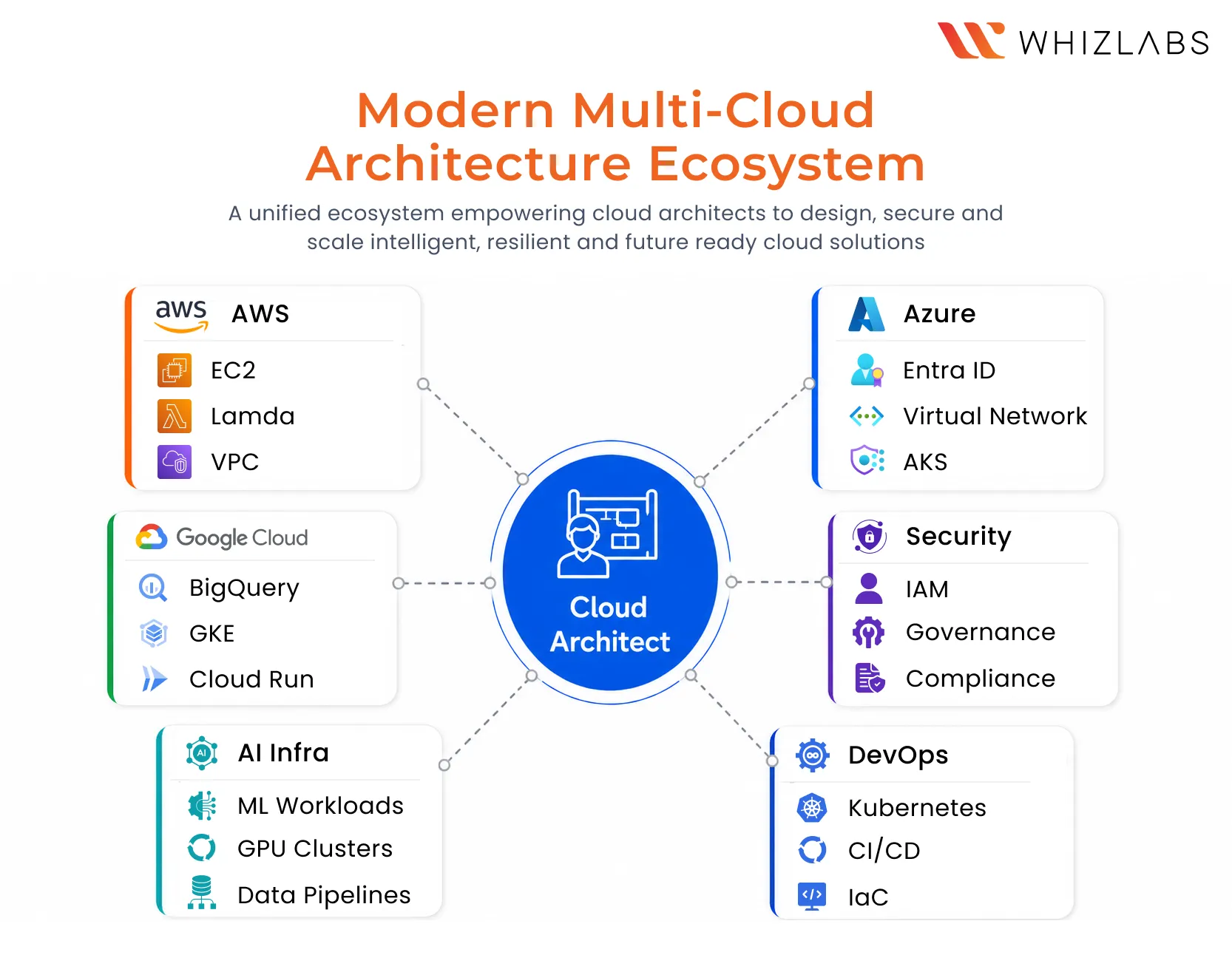
Modern enterprises are increasingly adopting cloud systems to improve scalability, agility, security, and operational efficiency. With the rise of artificial intelligence, microservices, containers, and serverless computing, cloud architecture has become central to digital transformation strategies.
Several factors continue driving demand for cloud architects:
- Large-scale enterprise cloud migration projects
- Multi-cloud and hybrid cloud adoption
- Growing AI and machine learning workloads
- Demand for cloud-native application development
- Increasing focus on secure and compliant cloud infrastructure
Cloud architects now play a critical role in helping organisations modernise infrastructure while balancing performance, governance, and cost optimisation.
What Does a Cloud Architect Do?
Before choosing a certification path, it is important to understand the responsibilities of a cloud architect. A cloud architect designs and manages cloud infrastructure, ensures security and resilience, collaborates with engineering and DevOps teams, and guides cloud adoption strategies across organisations.
The role requires a strong combination of technical expertise, business understanding, and strategic decision-making.
AWS Solutions Architect Certification
AWS remains the world’s leading cloud platform and continues to hold the largest global market share. AWS certifications are highly respected because organisations of every size rely on AWS infrastructure for scalability and reliability.
The two most recognised AWS architect certifications are:
AWS certifications are ideal for professionals seeking broad cloud architecture exposure, strong global demand, and flexible multi-cloud career opportunities.Professionals preparing for AWS architecture roles typically learn: Designing fault-tolerant systems, Building secure cloud workloads, Networking and VPC architecture, Serverless and microservices deployment and Cost optimisation and governance strategies.
AWS is often considered the best starting point for professionals transitioning into cloud architecture because of its extensive ecosystem and strong industry demand.
Azure Solutions Architect Certification
Microsoft Azure has become the preferred platform for many enterprises operating within Microsoft ecosystems.
Organisations already using technologies such as Windows Server, SQL Server, Office 365, and Active Directory often choose Azure because of its seamless integration and hybrid cloud capabilities.
The leading Azure architecture certification is Microsoft Certified: Azure Solutions Architect Expert (AZ-305).
Azure certifications are especially valuable for professionals targeting enterprise cloud careers, hybrid infrastructure roles, and corporate IT transformation projects. The AZ-305 exam course focuses on hands-on leanring experience, making it simplified if you are preparing for it.
Key Azure architecture skills include:
- Designing cloud and hybrid infrastructures
- Identity and access management
- Networking and security configuration
- Governance and compliance planning
- Cloud analytics and storage architecture
Azure continues to offer excellent opportunities for professionals already familiar with Microsoft technologies and enterprise environments.
Google Professional Cloud Architect Certification
Google Cloud has positioned itself strongly in AI, machine learning, analytics, and Kubernetes-based infrastructure.
It is particularly popular among modern technology companies building cloud-native applications and large-scale data platforms.
The most recognised GCP architecture certification is:
This certification focuses heavily on architectural decision-making and modern cloud-native design principles.
Professionals pursuing GCP certifications often gain expertise in:
- Designing secure data pipelines
- Building scalable multi-region systems
- Kubernetes and container orchestration
- BigQuery and Cloud Run deployments
- AI and machine learning infrastructure
Although the GCP job market remains smaller than AWS and Azure, demand for Google Cloud professionals is growing rapidly due to increasing AI adoption across industries.
AWS vs Azure vs GCP: Which Certification Should You Choose?
Choosing the right cloud architect certification depends largely on your long-term career goals. AWS is often the best choice for professionals seeking maximum global opportunities and broad cloud exposure.
Azure is ideal for enterprise infrastructure specialists and professionals working in Microsoft-centric environments. GCP is increasingly attractive for professionals interested in AI, machine learning, analytics, and cloud-native application development.
In reality, many organisations are now operating in multi-cloud environments. As a result, professionals with cross-platform cloud knowledge are becoming increasingly valuable.
Essential Skills for Cloud Architects in 2026
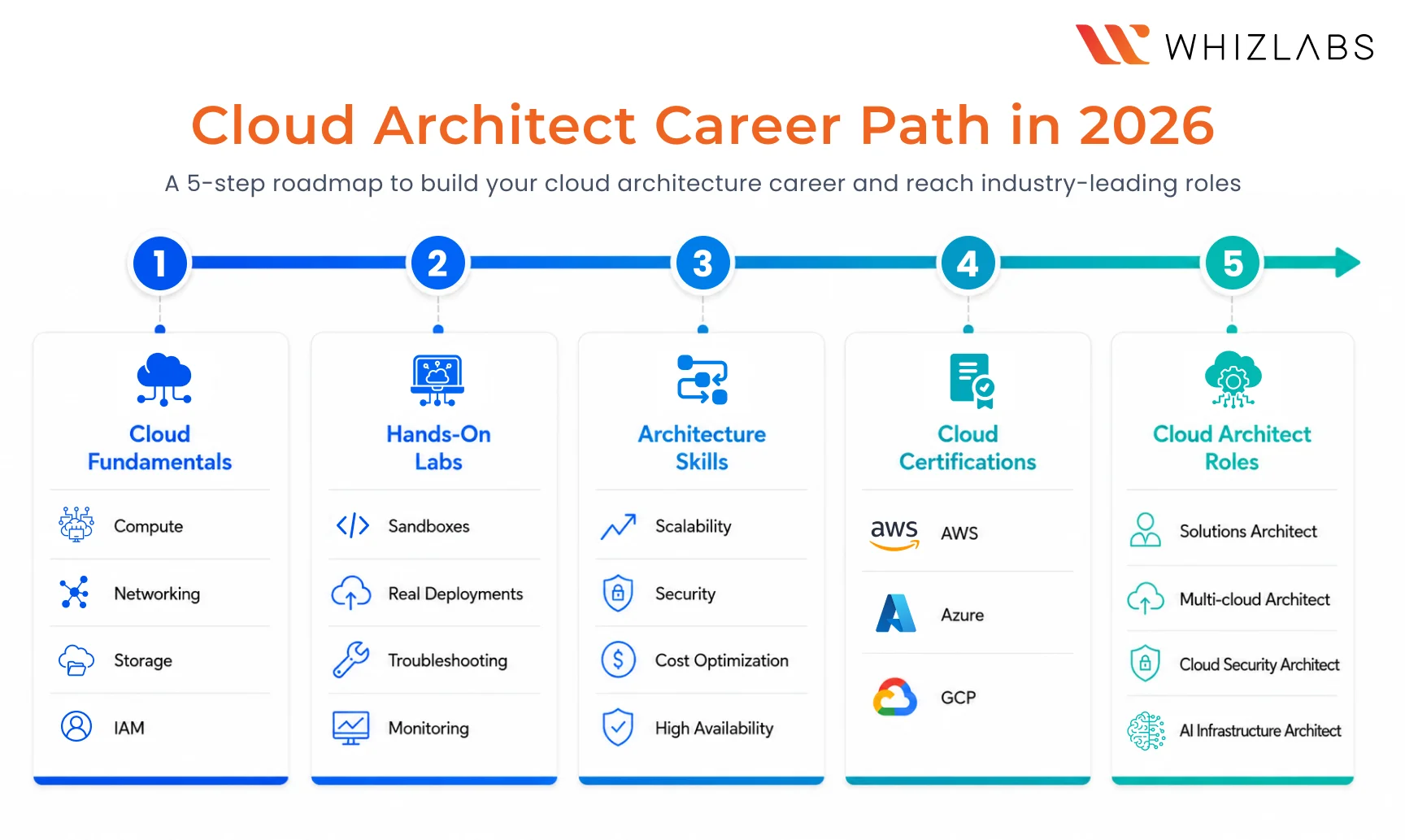
Cloud architecture requires more than certification alone. Successful cloud architects combine technical depth with practical implementation experience and business understanding.
Core technical skills include Cloud infrastructure design, Networking and security, Storage and database architecture, Serverless systems, Kubernetes and container orchestration, Infrastructure as Code and Monitoring and governance frameworks.
Hands-on practice is especially important because architecture roles involve solving real business and infrastructure challenges.
Cloud Architect Salaries in 2026
Cloud architecture continues to be one of the highest-paying career paths in IT.
Industry estimates suggest the following salary ranges globally:
- Cloud Architect: $130,000 – $180,000
- Senior Cloud Solutions Architect: $170,000 – $200,000+
- Multi-Cloud Architect: $180,000 – $250,000
- Cloud Security Architect: $160,000 – $220,000
Certifications help validate technical expertise and can significantly improve long-term career growth and earning potential.
A Hands-on Learning Path for Aspiring Cloud Architects
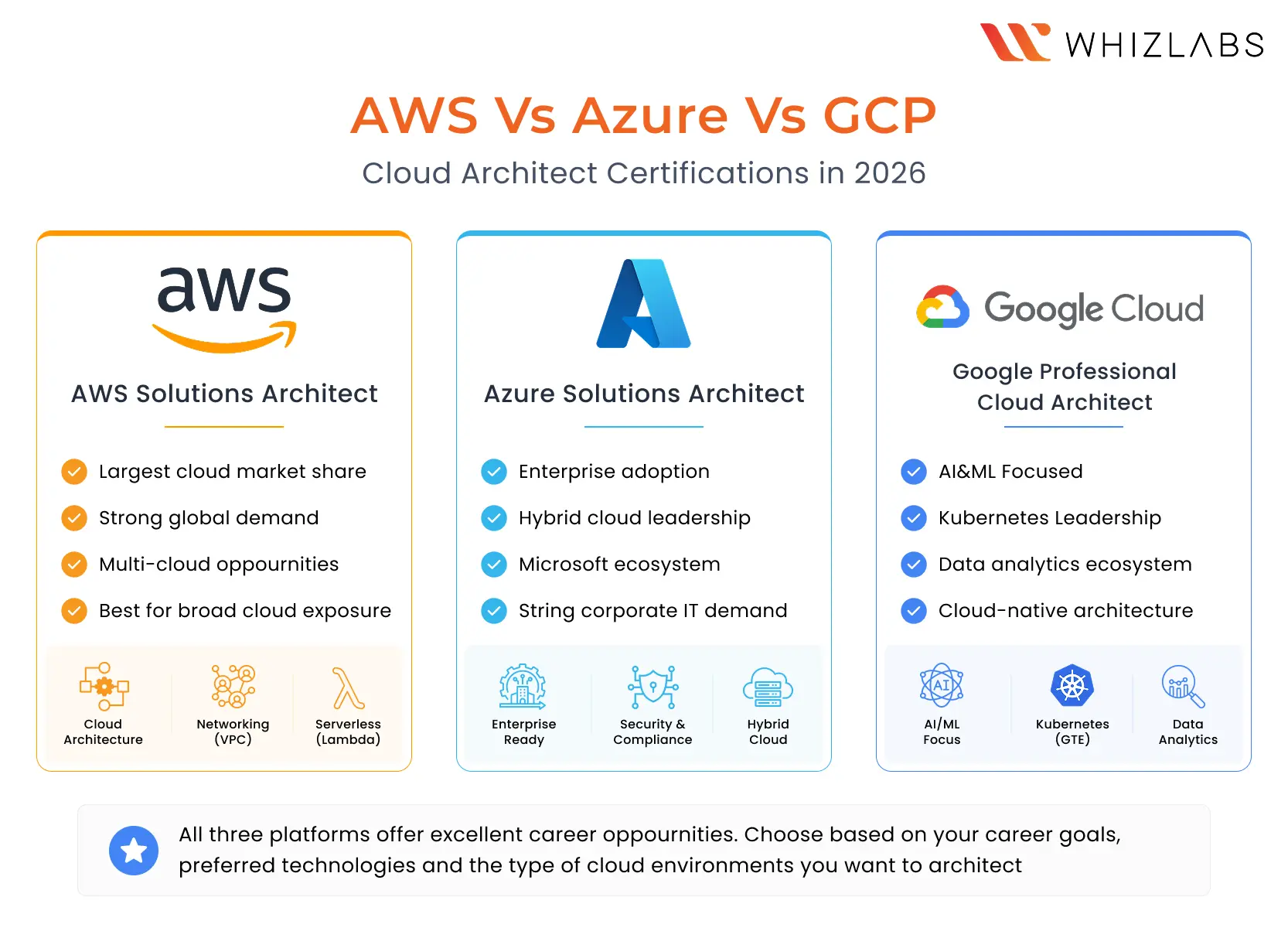
Becoming a successful cloud architect in 2026 requires far more than passing a certification exam. Employers now expect professionals to combine technical knowledge with practical implementation skills, architectural thinking, and real-world project experience.
This is where Whizlabs helps professionals build real-world cloud skills through structured learning experiences.
Whizlabs supports cloud learners with:
- Hands-on cloud labs
- Sandbox environments for AWS, Azure, and GCP
- Certification-focused practice tests
- Real-world architecture scenarios
- Guided projects and learning paths
- Detailed explanations aligned with current exam objectives
Rather than focusing only on theoretical preparation, the platform helps learners develop practical implementation confidence that is valuable in real cloud architecture roles.
Here is a practical roadmap for building cloud architecture expertise step by step.
Step 1: Build Strong Cloud Fundamentals
Before moving into architect-level concepts, it is important to understand the foundations of cloud computing.
This includes learning how core cloud services work across compute, storage, networking, databases, and security. Professionals should become comfortable with concepts such as virtual machines, cloud storage models, load balancing, scalability, identity management, and networking basics.
For AWS learners, this often means understanding services like EC2, S3, VPC, IAM, and RDS. Azure and GCP learners should similarly focus on their equivalent foundational services.
Without strong fundamentals, advanced architecture concepts become difficult to apply effectively.
Step 2: Choose the Right Cloud Architect Certification
Once the basics are clear, the next step is selecting a certification path aligned with your career goals. AWS certifications are often ideal for professionals seeking broad global opportunities and exposure to large-scale cloud systems.
Azure certifications are well suited for enterprise infrastructure and hybrid cloud careers, especially within Microsoft environments.
GCP certifications are increasingly valuable for AI, machine learning, analytics, and cloud-native application architecture. Choosing the right certification early helps create a focused learning path and prevents unnecessary confusion during preparation.
Step 3: Enrol in Structured Cloud Computing Courses
Self-learning can sometimes become overwhelming because cloud platforms contain hundreds of services and constantly evolving technologies.
Structured cloud computing courses help learners follow a guided roadmap instead of trying to navigate everything independently. Well-designed courses typically include:
- Certification-focused learning paths
- Guided architecture projects
- Hands-on labs
- Practice assessments
- Real-world deployment scenarios
- Step-by-step explanations of cloud concepts
Platforms like Whizlabs support learners through practical labs, cloud sandboxes, and architect-focused training paths that help bridge the gap between theoretical understanding and real implementation.
This significantly reduces the time learners spend trying to figure out what to study next.
Step 4: Practise Hands-on Cloud Labs
Hands-on experience is one of the most important parts of becoming a cloud architect.
Reading documentation alone is not enough. Professionals need to actively build, configure, troubleshoot, and optimise cloud environments.
Practical lab exercises may include: Launching virtual servers, Creating VPCs and virtual networks, Configuring IAM users and permissions, Deploying databases, Setting up load balancers, Managing Kubernetes clusters and Implementing monitoring and logging solutions.
Hands-on labs help learners understand real-world cloud environments while strengthening their troubleshooting, architecture design, and scenario-based problem-solving skills for certification exams.
Step 5: Build Real-world Cloud Architecture Projects
Projects are where cloud architecture skills truly begin to develop.
Instead of only following tutorials, learners should start building complete domain-based projects that simulate real business requirements.
Examples include:
- Designing scalable e-commerce architectures
- Creating secure healthcare data platforms
- Building multi-region application deployments
- Developing cloud-native microservices systems
- Designing AI/ML infrastructure pipelines
- Implementing disaster recovery solutions
These projects demonstrate architectural thinking, cost optimisation, scalability planning, and security awareness.
Employers value professionals who can showcase practical design capabilities rather than certifications alone.
Step 6: Prepare for Certification Exams Strategically
Once practical experience and foundational understanding are in place, certification preparation becomes much more effective.
Instead of memorising answers, professionals should focus on understanding architecture decisions and service trade-offs.
Effective exam preparation typically includes:
- Practice tests
- Scenario-based questions
- Architecture case studies
- Time-based mock exams
- Revision guides and exam blueprints
Platforms like Whizlabs provide certification-aligned practice exams and detailed explanations that help learners identify weak areas and improve exam readiness.
This combination of theory and hands-on learning often leads to much stronger long-term retention.
Step 7: Build a Strong Cloud Portfolio and Resume
One of the most common pieces of advice in cloud computing is simple: “Start building.” A strong cloud resume should not only list certifications. It should also showcase practical projects, architecture diagrams, cloud deployments, and implementation experience.
Professionals should highlight Cloud architecture projects, Multi-cloud experience, Cost-optimised infrastructure designs, Security implementations, Kubernetes and DevOps exposure, Infrastructure as Code projects and AI/ML cloud deployments where relevant.
Building a portfolio demonstrates initiative, practical capability, and real-world problem-solving skills. In today’s hiring market, practical cloud experience often creates a much stronger impression than certifications alone.
Final Thoughts
Cloud architecture is becoming one of the most strategic careers in technology, driven by rapid growth in multi-cloud, AI, and cloud-native adoption.
There is no single “best” certification. AWS offers the broadest global opportunities, Azure leads enterprise and hybrid cloud environments, while GCP is rapidly growing in AI and analytics.
But in 2026, successful cloud architects will not just earn certifications. They will build real-world, multi-cloud expertise through hands-on labs, architecture projects, and continuous practical learning.
Prepare with real-world skills and win the future of cloud architecture with Whizlabs.
Still have questions? Drop us an email at [email protected]. We will sort it out.

- GCP vs AWS vs Azure Architect Certification 2026 - May 22, 2026
- Best Cloud Certifications for Beginners in 2026 - May 13, 2026
- NVIDIA Agentic AI Certification NCP-AAI Guide 2026 - April 28, 2026
- How to Prepare for Microsoft AB-100 Certification? - April 7, 2026
- How to Become an AI Engineer in 2026: Roadmap, Skills, Salary & Certifications - March 23, 2026
- Generative AI LLM Career Paths in 2026: Roles & Certification - February 24, 2026
- Microsoft AB-900 Copilot Exam Guide 2026 - February 18, 2026
- Google Cloud Generative AI Leader Certification Guide 2026 - February 6, 2026